How Crumbling Foundation Parging Invites Spring Moisture Damage
Across Northwest Edmonton, spring melt exposes what winter tried to hide. Crumbling foundation parging opens a pathway for meltwater and rain to sit against the wall, wick into cracks, and push moisture into basements. In Castle Downs, Griesbach, The Palisades, Big Lake, and the older corridors off 97 Street and 137 Avenue, that thin protective coat at grade level is the first line of defence. When it fails, moisture follows. Property owners searching for how to repair a cracked foundation often learn that weak parging is the overlooked weak link. A trusted parging contractor Northwest Edmonton addresses that link before it becomes a flood-season headache.
What parging actually does on Edmonton foundations
Foundation parging is a protective skim coat over the exposed foundation above grade. It shields concrete or insulated concrete forms from splashback, freeze-thaw chipping, and sunlight. In plain language, it is a sacrificial armour that takes the beating so the wall does not. In Alberta’s climate, it also reduces capillary wicking. That is the tendency of bare concrete to draw water upward, which is strongest during spring melt when the soil and snow are wet but the air is still cool.
Well-bonded parging blocks water from sitting in surface pores. It sheds splash and slows surface saturation near the basement wall. On ICF (insulated concrete form) foundations, parging also protects the foam from UV and mechanical damage. When it is maintained, the foundation stays drier, the sill plate stays safer, and the basement air smells cleaner after the thaw.
Why crumbling parging fails in spring
Spring in Northwest Edmonton brings repeated freeze-thaw cycling. A thaw saturates the surface, then an overnight freeze expands that water by roughly 9 percent. That expansion pops micro-fragments off weak parging. Over weeks, those micro-fragments become flaking sheets. Once the coat loosens, water runs behind the parging and sits where sun and wind cannot dry it. The next cold night pries it farther off the wall.
Three drivers make failures worse between late March and early May along Anthony Henday Drive and Yellowhead Trail corridors:
First, snow piles placed against walls during winter insulate the area and keep meltwater pressed to the surface. Second, ladder marks, mower impacts, and shovels nick the coating along walks and driveways, especially near garage corners in Kensington, Rosslyn, and Westmount. Third, downspouts that discharge near grade raise surface moisture hours after each melt. Combine the three and crumbling parging becomes a moisture trap rather than a moisture shield.
Local patterns in Northwest Edmonton
Castle Downs neighbourhoods such as Baturyn, Beaumaris, Carlisle, and Lorelei feature 1970s-1980s homes with low garden beds and mature trees. Many have older cement plaster stucco above grade and original parging at the foundation. That era’s parging often lacks modern polymer modification, so it becomes chalky under repeated freeze-thaw. The result is widespread spring flaking along 153 Avenue and Castle Downs Road exposures.
Griesbach is newer, but its lakes, wind corridors, and heritage-style façades mean splashback and wind-driven rain. Along 97 Street and 137 Avenue boundaries, parging takes more direct weather than sheltered interior streets. Proper drip edges, clearance below stucco weep screeds, and intact parging make the difference between a dry wall and a damp sill plate in that LEED ND redevelopment zone.
Big Lake communities such as Hawks Ridge, Starling, and Trumpeter face open-wind exposure from Lois Hole Centennial Provincial Park and the Big Lake basin. Higher wind load means more driven rain against the base Click here for more of walls. Where builders used ICF, exposed foam must be protected. A durable parging coat that bonds to ICF mesh and transitions cleanly to acrylic stucco above grade is essential for those T5T routes west of 97 Street.
Older standalone neighbourhoods including Calder, Dovercourt, and Athlone show a different pattern. Foundations are often taller, with more area exposed above grade. That increases the square footage of parging and the chance for cracks near steps and driveways. Many of these properties fall within T5L, T5C, T5E, and T5X postal codes and rely on fast access from 176 Street NW to get repairs completed between late April and early June when drying conditions improve.
What homeowners and property managers see when parging breaks down
In the field, breakdown shows in simple ways. Chips collect at the base of the wall after freeze nights. A hollow, drum-like sound appears when tapping the surface. Hairline cracks open around window wells and hose bibs. Efflorescence, the white mineral powder left by evaporating water, dusts the surface. At the worst, sheets delaminate and reveal damp concrete behind.
That visual evidence matters because the foundation is the most expensive assembly to repair. While a query like how to repair a cracked foundation points to structural fixes, many wet-wall complaints begin with failed parging, misdirected downspouts, and high soil grade. Fixing the protective skin first is faster and far less invasive than interior structural work.
How crumbling parging invites moisture inside
Moisture takes the path of least resistance. Once parging weakens, spring melt finds hairline cracks at mortar lines, honeycombed concrete areas, and form-tie edges in poured foundations. It then wicks through the concrete’s capillaries. Basement air warms that moisture and draws it inward. The tell is a musty smell, darker baseboard edges on finished walls, or discoloured carpet tack strips behind a stair. On bare basements, it shows as darker concrete bands about 100 to 300 millimetres above the slab after a wet week.
The issue can escalate quickly in homes along 127 Street NW and 137 Avenue NW where yard drainage sometimes tilts toward the house. As the surface parging flakes off, each new rainfall adds to the load. The biggest risk window is the first heavy rain after the complete snow melt. That event often arrives before consistent drying conditions in May, and many Northwest Edmonton homeowners discover leaks that weekend.
Repair or replace: deciding what the foundation needs
Not every crumbling section means a full rebuild. The decision depends on bond strength, substrate integrity, and moisture exposure. If the parging is sound in most areas and the substrate behind it is dry, localized patching blended into the adjacent texture is efficient. If large sections sound hollow or substrate is damp, removal back to a solid edge and a full re-parge of that run is the safer choice.
In 2026 across Edmonton, foundation parging repair typically ranges from $5 to $10 per square foot installed. Small localized patches can be a few hundred dollars when access is easy. Long runs around corners, under decks, or behind shrubs add time. Winter or shoulder-season work that needs temporary heat and tarping costs more due to enclosure and labour. Where the foundation face is tall or where a step-up in grade requires more material, the square footage and cost rise accordingly.
What a professional looks at before recommending work
Experienced crews in Northwest Edmonton start with a visual survey and a bond test. That includes tapping to map hollow zones, checking expansion joints where stucco meets parging, and confirming the clearance between the stucco weep screed and finished grade. Moisture meter readings across suspect areas provide context. Window wells, downspout discharges, and driveway edges get special attention. Where the wall meets concrete steps or landings, edge-seal details and flashing conditions are inspected because those joints often leak first.
If readings show elevated moisture or if interior signs exist, selective removal of loose parging allows the substrate to dry before reapplication. On older properties near Westmount and Woodcroft, where cement plaster stucco transitions to parging are common, that transition is examined closely. A poor tie-in at that seam lets water bypass the parging entirely.
Materials that perform in Alberta’s freeze-thaw cycle
Basic sand-and-cement mixes are common, but polymer-modified parging compounds bond better and flex slightly under thermal movement. That small flexibility matters as temperatures swing from -30°C in winter to +30°C in summer. Polymer-modified systems resist micro-cracking and hold to older concrete that has seen many seasons of expansion and contraction.
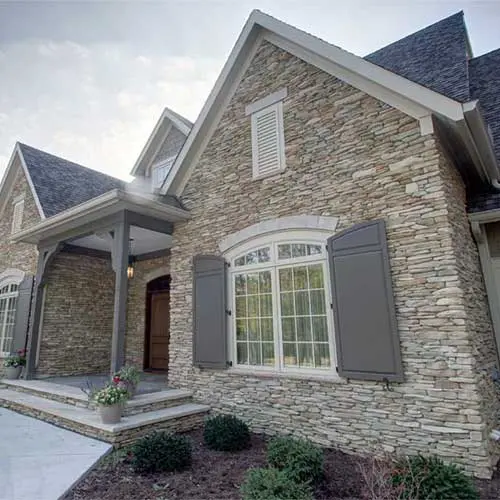
On ICF, a reinforced base coat that keys into the ICF mesh is essential. It creates a mechanical lock that does not rely on suction forces alone. Where parging transitions to stucco or EIFS above, proper sequencing is followed. Weep screeds must stay clear of grade by at least 150 millimetres so that water draining from the cladding does not saturate the parging line. Sealants at joints use a backer rod and flexible exterior-grade caulking to allow seasonal movement without tearing the joint.
For homeowners who want a colour-stable base, an acrylic topcoat over a cured parge can add water shedding and UV resistance. In areas with heavy splashback, a breathable elastomeric coating can bridge micro-cracks. Breathable means water vapour can escape from the wall, while liquid water is repelled on the surface. That balance reduces blistering in Edmonton’s spring shoulder season.
How parging interacts with stucco and EIFS above grade
Foundations do not exist in isolation. Above them, walls in Castle Downs and The Palisades often carry acrylic stucco or EIFS. EIFS adds continuous insulation, which keeps the wall warmer and reduces condensation risk. But any water that gets behind the cladding needs a drainage path. That path ends above the parging at the weep screed. If the parging is too high, it blocks the weep path. If it is too low or missing in sections, splashback can strike the lower edge of the sheathing. The correct detail is a clear gap under the weep screed and a robust parging face below, with a drip edge that keeps runoff off the foundation surface.
This is where scheduling helps. Many Northwest Edmonton exterior projects pair parging repair with stucco crack sealing or EIFS maintenance once access is set up. Crews repair hairline stucco cracks on the wall while parging crews rebuild the base. That integration reduces trips and gets the entire wall face performing as a system.
Seasonal timing and Edmonton weather windows
Parging needs a clean, dry surface and temperatures above freezing through the cure period. In the Edmonton region, the best windows are late April through early October. Spring work near T5T, T5X, T5Y, and T5W postal codes typically focuses on removal of loose sections, allowing drying, and then reapplication once night temperatures stabilize. Fall work must be scheduled to finish well before the first hard freeze. Shoulder-season repairs can proceed with temporary heat and hoarding, but that adds cost and setup time.
For properties along 97 Street NW and Yellowhead Trail, dust control matters. Windy conditions in Big Lake and St. Albert approaches can dry surfaces too quickly. Crews often mist surfaces lightly before application during hot days and protect fresh work from direct wind. Those small steps keep cures even and reduce early shrinkage cracks.
A shareable local insight
The 2000 to 2004 Alberta shift from cement plaster stucco to EIFS for residential walls changed how base-of-wall details should be built. Many Castle Downs homes still have original cement plaster above grade, installed when EIFS was rare. Those walls are now reaching end-of-life at the same time that their original parging is failing, which explains the wave of spring repair calls around Baranow, Canossa, Dunluce, and Rapperswill. In contrast, Big Lake’s Hawks Ridge and Trumpeter streets, mostly EIFS or acrylic, rely on a maintainable drainage gap at the weep screed and a resilient parge below. The pairing is key. When that lower coat crumbles, it does more than look rough. It chokes the drainage path, holds meltwater at the wall, and can undercut the main cladding’s long-term performance.
Commercial, multi-family, and townhome considerations
Townhome rails and condo grade beams along 137 Avenue and in Oxford see concentrated splash zones near downspouts and unit entries. Parging in these stacked exposure areas should be thicker and reinforced at corners. Where snow pushers scrape grade-level surfaces, impact-resistant edges save repeat repairs. On commercial fronts near 153 Avenue and along St. Albert Trail, vehicle splash and de-icing salts attack parging faster. Salt-tolerant coatings and periodic rinsing help, but material selection and correct slope away from the base make the largest difference.
What affects cost besides square footage
Square footage sets the baseline. Access, detailing, and moisture conditions set the rest. Corners, steps, and railings require more time. Shrub and bed removal or protection adds to setup. If crews find trapped moisture, they pause to allow drying before reapplication. Where the parging must tie into decorative stone veneer or thin brick, texture and colour match work increases labour.
- Access: under decks, behind shrubs, tight side yards along 127 Street NW Height: tall exposed foundation faces in older Calder and Dovercourt homes Season: temporary heat and hoarding in early spring or late fall Detailing: transitions to stucco, EIFS, or stone veneer at grade Water management: downspout re-routing or splash pad installation
Most single-family parging projects in Northwest Edmonton complete in one to three days of site time once surfaces are ready. Multi-family rows may be phased to keep access open and to align with condo schedules around Castle Downs Park and Griesbach Community Gardens.
Texture, colour, and finish expectations
Foundations do not need to look like afterthoughts. In Griesbach and Westmount, owners often request a lightly textured float finish that reads clean without showing trowel marks. Colour is usually kept neutral to hide surface dusting from sidewalks. Where decorative stone or manufactured stone veneer sits above the parging line, a slightly darker base tones down splash marks and visually anchors the façade.
If an elastomeric coating is selected for added flexibility, crews confirm breathability ratings and compatibility with the parging base. Paints that trap vapour can blister in Edmonton’s shoulder seasons when mornings are cold and afternoons warm quickly. Breathable acrylic latex or high-quality elastomeric formulations rated for exterior masonry avoid that trap and extend recoat intervals to about 8 to 15 years, depending on exposure and maintenance.
Water management details that preserve parging
Every strong parging job gains years of life with good water management. Downspouts that discharge 1.8 metres or more from the wall reduce splash and foundation wetting. Splash blocks at each outlet keep water off walkways where it would ricochet against the parging. Final grade should drop away from the wall at least 10 millimetres per 300 millimetres for the first two metres where space allows. In narrow side yards near 97 Street NW infill lots, concrete or paver strips with a slight slope carry water to the front or back without digging into the soil next to the foundation.
Homeowners often ask about waterproofing the foundation when searching for how to repair a cracked foundation. True structural cracks and below-grade leakage need different solutions than parging. But at the top of the wall, where the weather hits first, strong parging combined with correct grading and downspout placement prevents a large share of seasonal moisture complaints.
Older stucco, freeze-thaw stress, and why parging is often the first sign
Cement plaster stucco earned a reputation for toughness on barns and warehouses in Alberta because interior humidity is low and temperature swings are gentle across those envelopes. On houses across Castle Downs and Kensington, interiors are warmer and more humid. That stress shows at the base of walls first, where parging and stucco meet grade. When freeze-thaw opens hairline cracks, parging flakes before the field wall above. It is the canary in the coal mine for wall movement and moisture accumulation. Fixing it early avoids compound repairs later that would involve sheathing replacement or mould removal.
Coordination with permits and condo boards
Most parging repair does not trigger a building permit in Edmonton because it is finish maintenance, not structural modification. That said, multifamily sites near Northgate Centre and Namao Shopping Centre often require condo board approvals and scheduling around resident access. Crews set clear staging plans, keep walkways open, and post schedule notices. Where work touches common property drainage or landscaping, coordination with property managers prevents rework and improves long-term performance.
What to ask a parging contractor in Northwest Edmonton
A strong outcome depends on the right questions. Who performs the bond test and moisture check on site? What polymer-modified material is planned for the substrate type? How will crews protect adjacent stucco, EIFS, or stone veneer from staining? What is the plan for cold mornings or hot, dry winds off St. Albert Trail? Does the written quote specify square footage, prep scope, and curing protection?
- Alberta licensing, bonding, and liability insurance confirmation Written quote with scope, materials, and schedule Workmanship warranty terms and material warranty where applicable Experience tying parging into stucco and EIFS with correct weep gaps References in nearby neighbourhoods such as Oxford, Beaumaris, and Griesbach
These items separate a dependable parging contractor Northwest Edmonton from a quick patch outfit that leaves weak edges foundation crack repair and smeared transitions.
A brief note on EIFS, acrylic stucco, and base-of-wall performance
EIFS, the multi-layer exterior insulation and finish system, adds R-3 to R-5 per inch of continuous insulation and can reduce air infiltration by up to 55 percent compared to brick or wood alone when properly detailed. That performance shines across Big Lake and exposed corridors near Ray Gibbon Drive. Yet even high-performance walls depend on a healthy base. The parging below the weep screed lines the battlefield where snow, salt, and shovels do their work. The pairing of drainable EIFS above and resilient parging below is what keeps basements dry and heating bills steady on windy March days.
Why owners choose a local team for spring parging
Crews working from 8615 176 Street NW in the T5T area reach Castle Downs, Palisades, Griesbach, and the Big Lake envelope quickly through Anthony Henday Drive and Yellowhead Trail. That proximity matters in short spring weather windows. Local crews read the forecast, set up hoarding only when needed, and select materials that match the site’s exposure. They also understand the historic context of Castle Downs’ Scottish-castle-themed neighbourhood fabric and the heritage-inspired details in Griesbach that deserve crisp base treatments, not generic smears at grade.
The quiet ROI of keeping parging strong
Parging repair is not flashy work. But it keeps the rest of the wall doing its job. It prevents splashback staining, protects ICF foam at the base, and keeps the drainage path open under stucco or EIFS. It reduces the chance that a home search for how to repair a cracked foundation turns into a structural repair budget meeting. In Northwest Edmonton, where spring can swing from thaw to freeze and back again in a day, that quiet ROI pays every year.
Ready to fix crumbling parging before spring moisture hits
Depend Exteriors serves Northwest Edmonton with parging application and parging repair that match Alberta’s freeze-thaw reality. The team is Alberta licensed and bonded, carries liability insurance, and works six days a week with extended hours Monday through Friday 8 AM to 7 PM and weekends 8 AM to 3 PM. Owner Hasan Yilmaz oversees projects and aligns parging with adjacent stucco, EIFS, stone, and caulking work so each base-of-wall detail performs as a system. The company has operated in Edmonton for 13-plus years and provides a free estimate with a transparent written quote and workmanship warranty coverage on installation labour.
If crumbling parging is showing up along 97 Street, Castle Downs Road, or the Big Lake edge routes, book a site visit now with a parging contractor Northwest Edmonton who understands the local housing stock, the weather windows, and the way spring moisture moves. Contact Depend Exteriors at +1-780-710-3972 or visit https://dependexteriors.com/ for a free estimate. For condo boards and property managers in Griesbach, Oxford, Beaumaris, and throughout T5T, T5X, T5Y, and T5W, request a written quote and schedule during shoulder-season weeks. A dedicated parging contractor Northwest Edmonton will map moisture, rebuild the protective coat, and set the foundation line up for a dry spring. A parging contractor Northwest Edmonton can also coordinate small stucco crack repairs and weep screed clearances at the same time to lock in system performance. When in doubt, call the local parging contractor Northwest Edmonton that treats the base of the wall as the start of a healthy building envelope.